Social cognition is a key component of human psychology. Yet, how social thoughts manifest in our minds and predict meaningful outcomes like social connection remains to be fully determined. Our work aims to fill this gap by characterizing novel social cognitive constructs, identifying their brain basis, and determining their links to everyday social experience. We integrate theories and methods from multiple areas of work (e.g. from social psychology, cognitive neuroscience, and social neuroscience) to examine how people encode, reason about, consolidate, and retrieve information from their social lives. Our work is always evolving and moving in new directions, but some ongoing lines of research are described in more detail below.
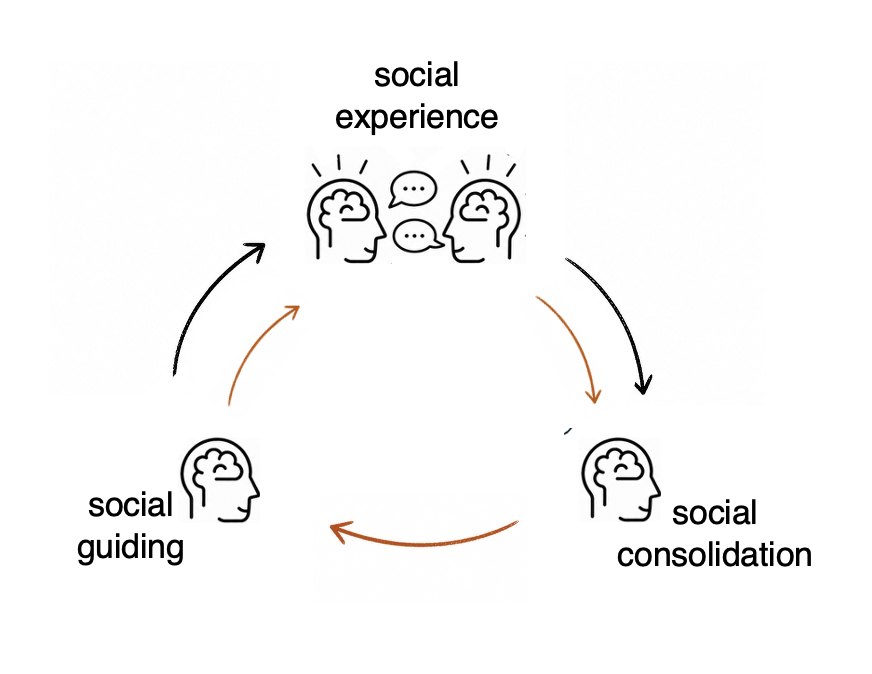
Default Network Social Guiding and Consolidation at Rest
In everyday life, we move in and out of social interactions – for example, you may have a moment to yourself just prior to your dinner with friends and after dinner, you may again be on your own and have a “mental break” before coming home to your family. Our work suggests that even during these breaks from socializing, neural representations of social information are spontaneously kept in an online state to guide your next social behavior (“social guiding”) and reappear after an interaction to help you learn from the social experience (“social consolidation”). We are continuing to ask and answer questions about the “offline states” that may help us optimize social learning and memory.
Learn more about this line of work in the publications below.
Geisler, D. & Meyer, M. L. (2025). Identifying a neural signature that predicts the bias towards self-focus. Journal of Neuroscience, 45(43):e0037252025. Download PDF.
Geisler, D., & Meyer, M. L. (2025). The default netwok and social cognition: new insights and future directions. Current Opinion in Behavioral Sciences, 66, 101585. Download PDF.
Jimenez, C. A. & Meyer, M. L. (2024). Dorsomedial prefrontal cortex (DMPFC) prioritizes social learning during rest. Proceedings of the National Academy of Sciences, 121(12), e2309232121. Download PDF.
Iyer, S., Collier, E., Broom, T. W., Finn, E. S., & Meyer, M. L. (2024). Individuals who see the good in the bad engage distinctive default network coordination during post-encoding rest. Proceedings of the National Academy of Sciences, 121(1) e2306295121. Download PDF.
Brietzke, S., Barbarossa, K. & Meyer, M. L. (2024). Get out of my head: social evaluative brain states carry over into post-feedback rest to promote learning what others think of us. Cerebral Cortex, 34(7). Download PDF.
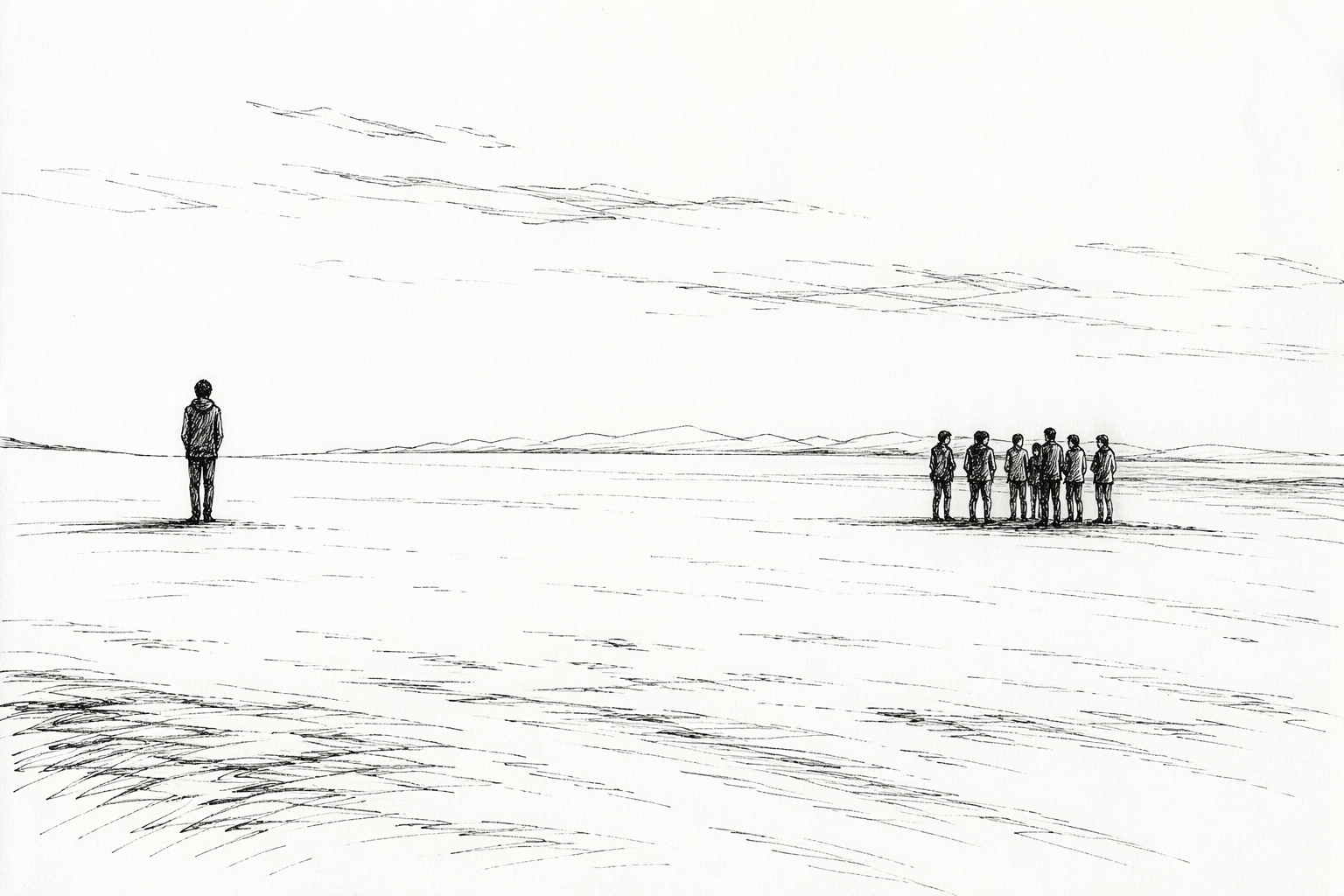
Loneliness is widespread in contemporary life and associated with several negative outcomes, including increased risk of depression and even mortality. Loneliness is also an intrinsically subjective experience, which is why many objectively well-integrated individuals report feeling lonely while many solitary individuals do not. Yet, we still do not fully understand why loneliness emerges in subjective experience. In this line of research we aim to characterize the mental representations that may give rise to loneliness. For example, we have found lonely individuals’ neural representations of themselves are highly dissimilar from their neural representations of the people they know, grounding their feeling of isolation in their objectively assessed neurobiology. We have also seen that lonely individuals represent social information idiosyncratically, which may compromise finding common ground with others. Ongoing and future projects will continue to ask why, when, and how loneliness emerges.
Learn more about this line of work in the publications below.
Broom, T., Iyer, S., Courtney, A. L., & Meyer, M. L. (2024). Loneliness corresponds with neural representations and language use that deviate from shared cultural perceptions. Communications Psychology, 2(40). Download PDF.
Courtney, A. L., & Meyer, M. L. (2020). Self-other representation in the social brain reflects social connection. Journal of Neuroscience, 4(20), 5616-5627.Download PDF.
The Mental Representation of Loneliness
Self-knowledge and its plasticity in social interaction
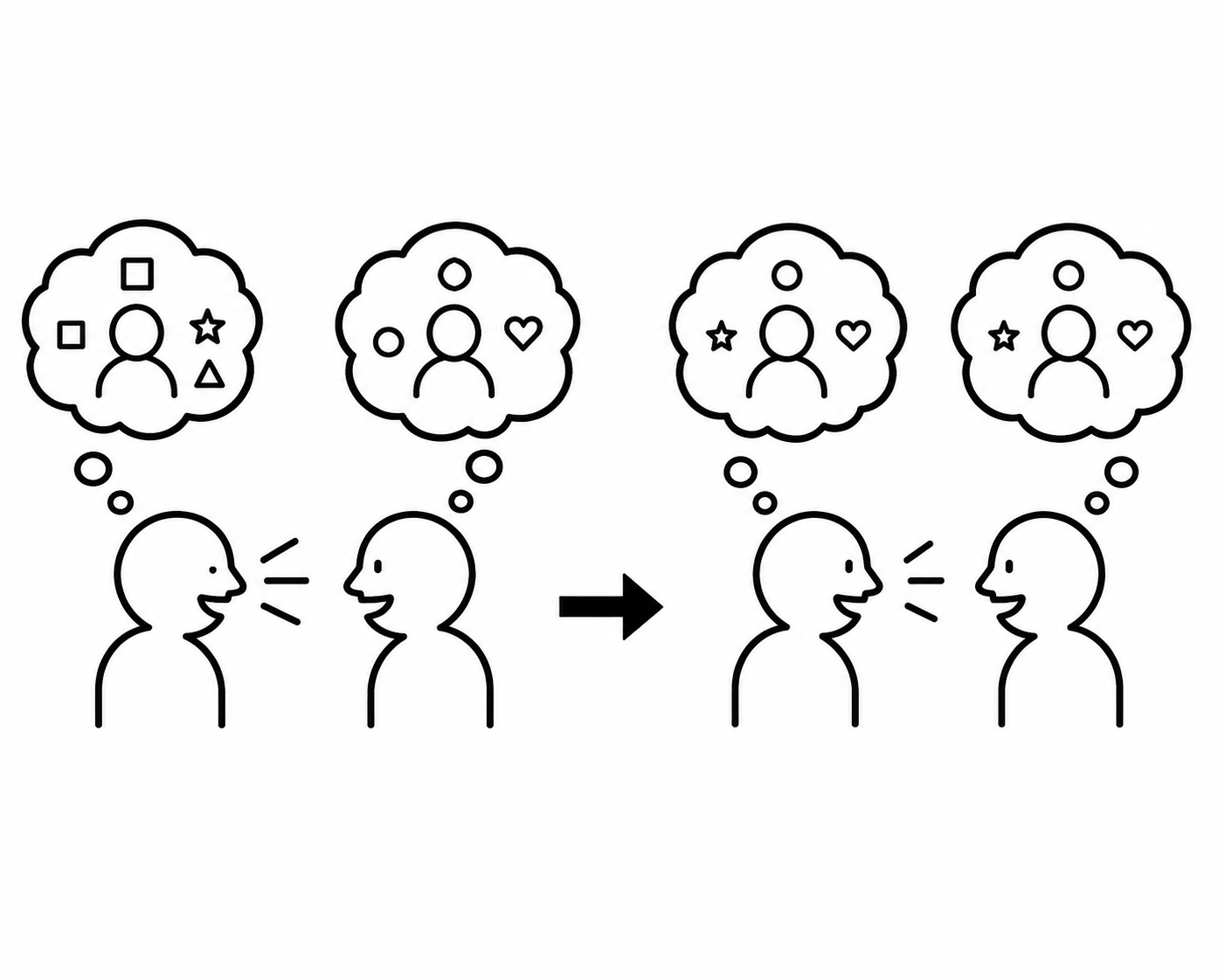
The sense of self is a hallmark of human experience. Each of us maintains a constellation of personal memories and personality traits that collectively define “who we really are.” At the same time, the self is not a fingerprint. Our psychological identities are not fully formed upon our entry into the world; they can change considerably over time and across situations. In this line of work, we aim to understand how people organize their mental representations of themselves and how social interactions can alter self-perception.
Learn more about this work in the publications below.
Welker, C., Wheatley, T., Cason, G., Gorman, C., & Meyer, M. L. (2024). Self-views converge during enjoyable conversations. Proceedings of the National Academy of Sciences, 121(43), e2321652121. Download PDF.
Brietzke, S., & Meyer, M. L. (2021). Temporal self-compression: Behavioral and neural evidence that past and future selves are compressed as they move away from the present. Proceedings of the National Academy of Sciences, 18(49), e2101403118. Download PDF.
Brietzke, S., Barbarossa, K. & Meyer, M. L. (2024). Get out of my head: social evaluative brain states carry over into post-feedback rest to promote learning what others think of us. Cerebral Cortex, 34(7). Download PDF.
Courtney, A. L., & Meyer, M. L. (2020). Self-other representation in the social brain reflects social connection. Journal of Neuroscience, 4(20), 5616-5627.Download PDF.
Meyer, M. L., Zhao, Z., & Tamir, D. I. (2019) Simulating other people changes the self. Journal of Experimental Psychology: General. Download PDF.